What Is Meta AI? Inside the New Era of Artificial Intelligence by Meta
Artificial intelligence is evolving at an unprecedented rate, reshaping how we communicate, create, and conduct business. Big tech companies from OpenAI to Google and Apple are racing to define the future of artificial intelligence.
One of these companies is Meta. They launched Meta AI with a bold and accessible vision. Built on the powerful open-source Llama model family and integrated across Meta’s social platforms, Meta AI represents the company’s push toward a more open, multimodal, and integrated AI future.
But what exactly is Meta AI, how does it work, and why is it becoming such a defining force in the new era of digital intelligence?
The Global Evolution of AI
Artificial intelligence has entered a hyper-accelerated phase, transforming from a niche research field into the driving force behind modern technology. The last few years have been especially pivotal.
Breakthroughs like GPT-style large language models, multimodal systems that process text, images, and audio together, and emerging agentic AI capable of taking autonomous actions have redefined what machines can understand and create.
Major tech companies play a critical role in the evolution of AI:
- OpenAI pushed the boundaries of natural language reasoning.
- Google's advanced multimodal search and generative capabilities.
- Amazon embedded AI deep into its cloud infrastructure.
- Apple focused on integrating privacy-first on-device intelligence.
- Meta doubled down on open, scalable AI systems.
These developments are fueling a broader shift toward AI-driven personalization, automation, and more intuitive human-machine interactions. AI is becoming the new foundation of digital experiences, setting the stage for the rise of accessible everyday AI tools.
Where Meta Fits into the AI Competition 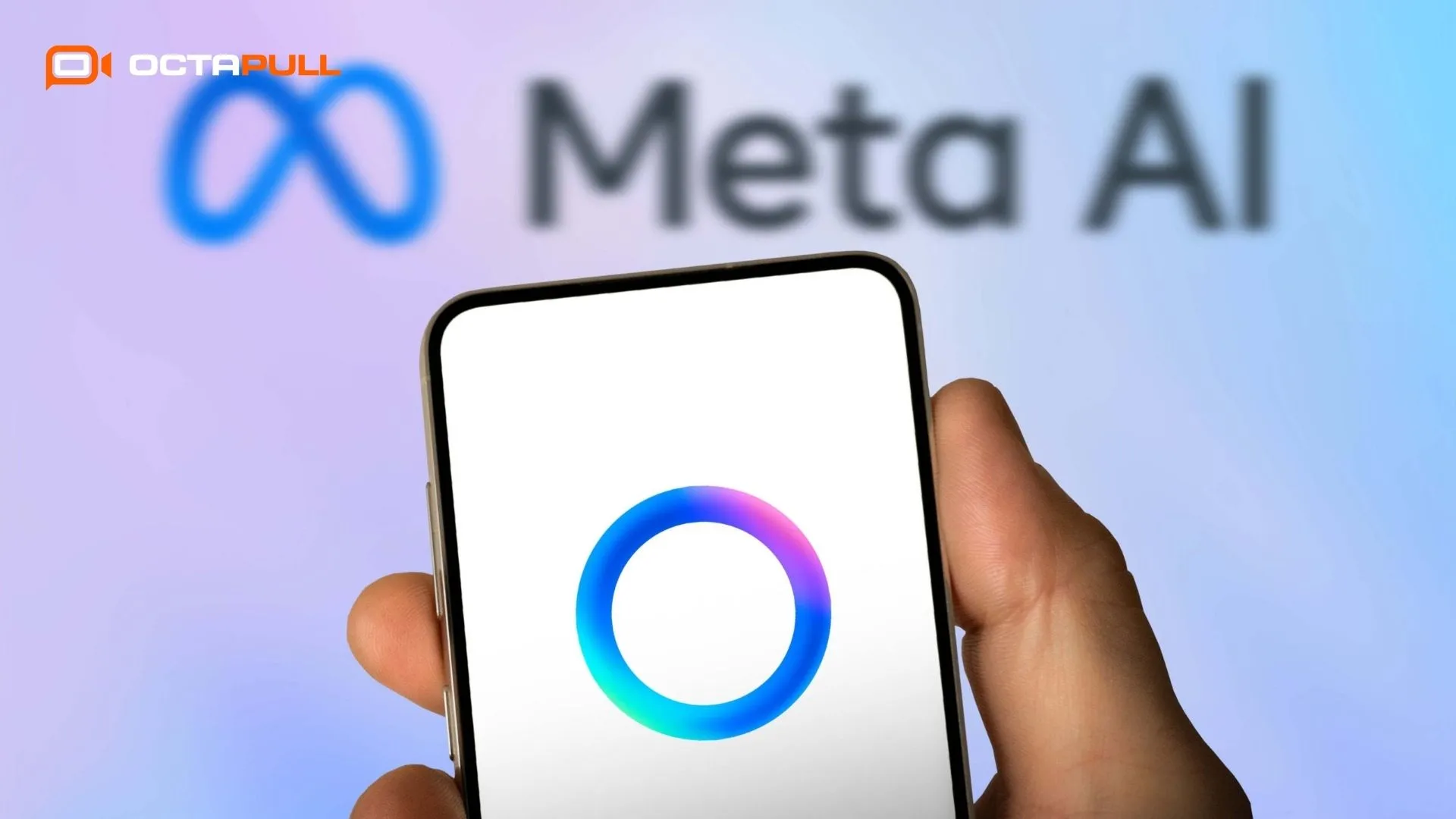
While many tech giants have entered the AI competition recently, Meta has actually been laying the groundwork for over a decade.
Through its research division, FAIR (Facebook AI Research), the company has consistently pushed the boundaries of open-source machine learning: publishing models, tools, and scientific breakthroughs that the global AI community builds upon today.
Meta’s long-term vision revolves around making advanced AI widely accessible. Instead of locking capabilities inside exclusive products or premium services, Meta believes that innovation accelerates when developers, businesses, and everyday users can build freely.
This philosophy is at the core of the Llama model family and its entirely open approach, which contrasts sharply with the closed proprietary models seen elsewhere.
Meta is now investing heavily in a platform-wide intelligent ecosystem that spans Facebook, Instagram, WhatsApp, Messenger, and even hardware like Ray-Ban Meta smart glasses.
By embedding AI directly into the apps billions of people use daily, Meta aims to create a unified assistant that enhances creativity, productivity, communication, and entertainment.
What is Meta AI?
Meta AI is Meta’s multimodal, open artificial intelligence assistant that integrates seamlessly across Facebook, Instagram, WhatsApp, Messenger, and even Ray-Ban Meta smart glasses.
Designed to understand text, images, and real-time context, it helps users search, create, plan, and interact more naturally within the apps they already use every day. Unlike traditional assistants, Meta AI is conversational, context-aware, and proactive.
This means it is able to understand needs, offer suggestions, and streamline tasks in a way that feels intuitive and integrated. This platform-wide intelligence positions Meta's AI as a leader in the next generation of digital assistants.
The Technology Behind Meta AI
The Llama Family of Models (Llama 2, Llama 3, Llama 3.1, etc.) is the core of Meta AI. Meta’s open-source large language model family (LLM) is designed to power everything from simple chat to advanced reasoning.
Llama models matter because they combine high performance with accessible licensing, allowing developers, researchers, and businesses to build their own AI solutions without the restrictions of closed systems.
This open approach has created a massive community that continuously improves the models, contributing tools, datasets, fine-tunes, and extensions.
Multimodal Intelligence
Meta AI is built to understand and generate content, including text, images, audio, and video. This multimodal ability enables the assistant to interpret a photo, answer a spoken question, describe a scene, or help create visual content.
It also excels at real-time reasoning and context awareness, meaning it can analyze what’s happening on screen and provide relevant, timely assistance.
By processing signals from different inputs and combining them intelligently, Meta AI can deliver insights, suggestions, and actions that feel more useful and aligned with what users are actually trying to accomplish.
Open-Source Approach
Meta’s decision to open-source its AI models is both strategic and philosophical. Open access encourages transparency, enabling researchers to study, test, and improve the AI technology without barriers.
It also accelerates innovation by allowing developers, creators, and businesses of all sizes to build on top of powerful models freely.
Therefore, Meta stands as a champion of democratized AI where progress is driven by community collaboration, shared knowledge, and wide accessibility.
What are the Key Applications of Meta AI? 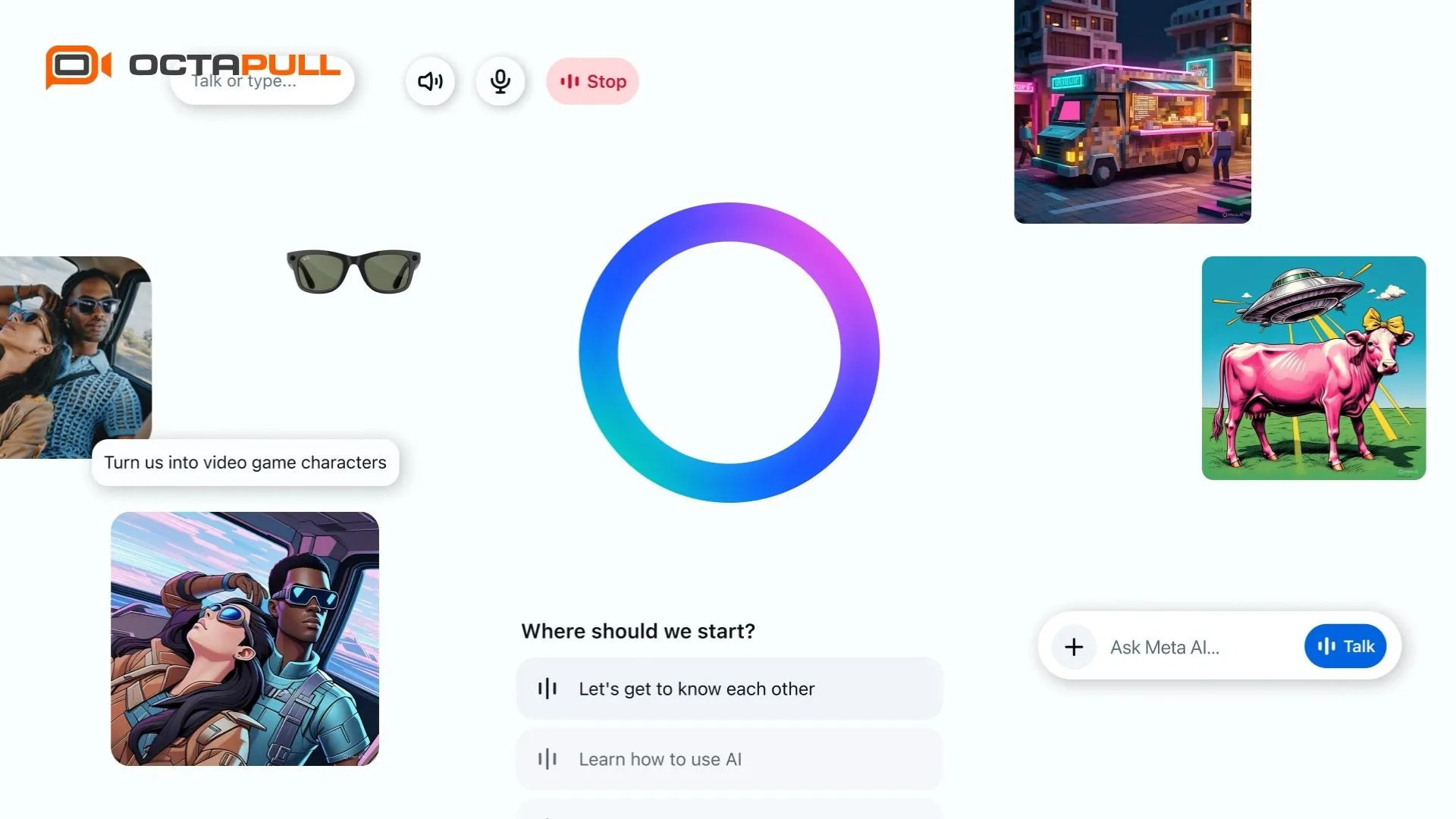
1. Content Generation for Creators and Businesses
Meta AI helps creators and brands produce content quickly. It suggests captions, post ideas, and visual styles. It can generate or edit images as well. Businesses can also create simple ad assets and campaign visuals with AI support.
2. Customer Engagement and Messaging
On WhatsApp and Messenger, it works as a customer assistant. It answers common questions, supports customers during purchases, and handles simple support tasks. These AI chats feel natural and personalized, which improves customer satisfaction.
3. Predictive Analytics
Meta AI can analyze how users behave on Meta platforms. It shows trends, growth patterns, and engagement levels. With these insights, brands understand what works and make better decisions.
4. Workflow & Business Automation
Meta AI can automate many routine tasks. It can schedule posts, reply to common messages, prepare simple reports, and optimize ongoing campaigns. This saves teams time and helps them focus on creative or strategic work.
5. Everyday Productivity for Users
Meta AI also supports everyday tasks. It can search for information, summarize text, plan events, or create to-do lists. Because it works across Meta apps, users get quick and seamless help whenever they need it.
How Meta AI Could Transform the Future
Redefining Accessibility
Meta AI makes advanced tools easier to access. It lowers the barriers that often prevent people from using powerful technology.
Individuals, small businesses, and global communities can now use AI in a simple and affordable way. This creates more equal opportunities for everyone.
Boosting Collaboration
Meta AI also supports better teamwork. Users can co-create content with AI and share ideas more easily. This helps creators, influencers, and business partners explore new possibilities. It encourages more creative and dynamic collaboration.
Accelerating Productivity in the AI Era
Meta AI makes daily work faster and smoother. It helps produce better content and provides useful analytics. Businesses can scale their operations with less manual effort. This leads to smarter workflows and stronger results over time.
Final Thoughts
Meta AI is more than a basic assistant. It is a step toward a more open and collaborative AI future. As Meta brings AI deeper into its platforms, the way we create, communicate, and work online will change in a big way. Meta AI also shows a clear shift toward tools that are transparent, accessible, and designed for everyone.
Frequently Asked Questions About Meta AI
1. What is This Meta AI?
Meta AI is an intelligent assistant created by Meta. It can answer questions, generate content, help with tasks, and understand both text and images. It works across Meta apps like Facebook, Instagram, WhatsApp, and Messenger.
2. How to Access Meta AI?
You can access Meta AI inside Meta apps. Open Facebook, Instagram, Messenger, or WhatsApp and look for the Meta AI search bar or chat option. In some regions, it may appear as a dedicated chat or as a tool inside the search field.
3. Is the Meta AI App Free?
Yes. Meta AI is free to use. You only need a Meta app that supports it. Availability may depend on your region.
4. How to Use Meta AI on WhatsApp?
Open WhatsApp and start a new chat with “Meta AI” if the feature is available in your region. You can also type “@Meta AI” inside any chat to ask a question. The assistant will respond with information, suggestions, or content based on your request.