What is AI Meeting Note Taking? Increase Your Meeting Efficiency with Octapull
In the modern business world, every meeting is a critical process where strategic decisions are shaped. Compiling notes and informing the team afterwards can become a significant time loss.
The question of what AI meeting note taking is has settled into the center of today's business life. Through speech recognition and natural language processing technologies, transcription becomes automatic.
Local AI-supported platforms, such as OctaMeet, may support decision makers by significantly lightening their overall workload. These advanced systems aim to improve overall daily corporate communication workflows smoothly.
What is AI Meeting Note Taking?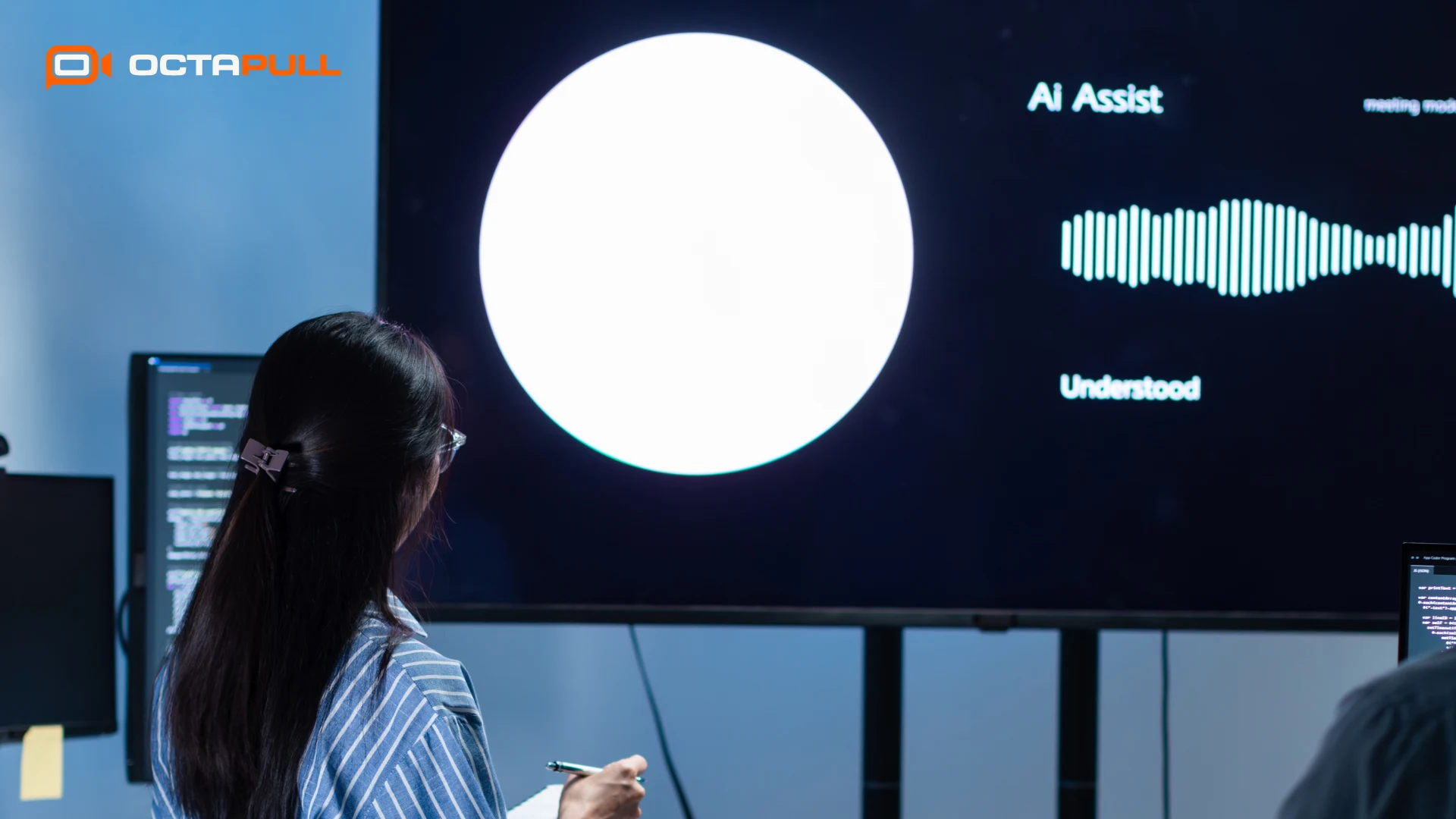
AI-supported meeting note taking is a smart approach that creates structured summaries by translating conversations into real-time text. Speech recognition and natural language processing algorithms convert content into meaningful data.
Challenges of Traditional Note Taking Methods
In traditional approaches, participants must both actively listen and write. As the distraction risk increases, critical decisions and important information made during the meeting can easily be completely overlooked.
Handwritten or typed meeting notes can be interpreted differently from person to person. Inconsistent and incomplete records may weaken corporate memory over time, preparing the ground for information gaps.
Transcribing notes and distributing them to relevant individuals after the meeting requires serious extra overtime. Since tracking action items requires separate effort, responsibilities may become unclear, slowing business processes.
Fundamental Functions of AI Note Taking
AI-supported note taking systems instantly convert meeting conversations into text using speech-to-text technology. Each speaker's expression is individually labeled, clearly identifying exactly who said what during the discussion.
The generated raw text is analyzed by natural language processing engines to determine semantic priority. The system attempts to automatically highlight critical decisions, important commitments, and frequently repeated topics.
At the end of the meeting, the system aims to present an easily readable, share-ready summary. Task assignments and deadlines can also be automatically transmitted to relevant team members.
Difference Between Automated Note Taking and Meeting Summarization
Automated note taking refers to the real-time transcription process that records conversations as raw text. Meeting summarization aims to process the text, highlighting only critical decisions and main headings.
The main difference between manual note taking and AI note taking lies in the information filtering process. While manual methods rely on memory, AI can process all speech systematically.
Both approaches do not exclude each other. While AI provides transcripts and summaries, participants can focus on the agenda; handwritten notes may serve as complementary elements for contextual insights.
What Are the Benefits of AI-Supported Meeting Note Taking?
AI note taking tools can provide significant time savings while improving meeting efficiency. They can offer concrete contributions to teams in many areas, from action tracking to corporate memory.
Time and Resource Savings
Automating the meeting transcription and summarization process can help relieve participants from their administrative workload. Operational tasks like refining notes and preparing email chains can be completed within minutes.
According to research, manual note taking per meeting can easily exceed twenty to thirty minutes. When AI tools manage the process automatically, employees can direct their energy toward strategic tasks.
Increased Note Accuracy and Comprehensiveness
Human memory possesses a selective filter. Every piece of information spoken in a meeting may not be noted with equal attention. AI transcription systems help minimize potential information loss effectively.
Thanks to speaker diarization technology, who said what can be recorded much more clearly. Even in complex sessions where multiple participants speak, responsibility ambiguity can be proactively reduced.
Easy Tracking of Action Items
AI note taking systems can automatically detect commitment expressions mentioned during meeting conversations. This way, sentences like delivering a report by Monday can be transformed into task cards immediately.
Listing action items with the responsible person and deadline facilitates project tracking. Thus, managers can clearly see who needs to do what by when after the meeting concludes successfully.
Quick Access to Information After the Meeting
In AI-supported platforms, meeting transcripts and summaries are automatically saved completely to the archive. When reviewing past conversations is necessary, relevant sections can be accessed quickly through keyword searches.
Instead of scanning long email chains, critical decisions can be found in seconds through a structured meeting summary. Such accessibility can significantly accelerate business processes for active decision makers.
Strengthening Intra-Team Communication and Knowledge Sharing
Team members who miss the meeting can instantly learn about developments by reviewing the summary and action list later. As information asymmetry decreases, intra-team communication gains a consistent foundation.
Automated post-meeting email notifications can simultaneously transmit taken decisions and task distributions to all participants. The risk of information disconnect between team members from different departments is effectively reduced.
How Does AI-Supported Meeting Summarization Work?
AI-supported meeting summarization is a multi-step process based on speech recognition, NLP analysis, and summarization algorithms. Every single stage complements the others to reach structured outputs from raw transcripts.
Speech Recognition and Transcription
From the moment the meeting begins, the speech-to-text engine activates, converting participants' voices into text in real time. Thanks to the instant subtitle stream, conversations become trackable on screen.
Modern speech recognition systems can label who said what with their speaker diarization feature. Even in complex scenarios where multiple people speak, the text is organized without causing confusion.
Making Sense with Natural Language Processing
After conversations are transcribed, the natural language processing engine begins to analyze the raw text semantically. The relationship between sentences and the overall context structure are evaluated at this stage.
During the meaning extraction phase, the system can distinguish repeated topics, debatable points, and agreed-upon statements from each other. Semantic analysis thus acts as a filter, eliminating unnecessary content.
Key Point and Decision Extraction
NLP-based decision extraction systems try to automatically detect critical decisions and commitments within conversations. Expressions like approving the budget or changing strategies can be marked through this intelligent process.
Extracted decisions are placed at the top layer of the meeting summary, aiming for participants to reach critical information first. The detailed transcript remains accessibly stored in the archive.
How Are Summarization Algorithms Used?
Summarization algorithms can utilize two main approaches: extractive and abstractive summarization. While the extractive method transfers existing sentences directly, the abstractive method generates an entirely new structured text.
Large language models can create fluent, context-sensitive summaries closely resembling human language during the abstractive summarization process. As meeting content complexity increases, the contribution of advanced models continues growing.
How Are Action Items Determined?
AI systems can perform semantic analysis on the transcript to automatically detect task expressions. Phrases like arranging a client meeting or finishing the report are considered among typical action examples.
Detected tasks are matched with responsible person information; deadlines and priority levels can also be automatically extracted from the conversational context. Ultimately, a clear assigned task list is created.
How Do AI Meeting Note Taking Solutions Increase Efficiency for Teams?
AI meeting note taking solutions can facilitate teams' focus on strategic goals by reducing operational burdens. Manual workload, decision speed, and knowledge sharing are the most positively affected areas.
Reducing Manual Workload
The time spent compiling and distributing meeting notes can directly turn into productive work loss. AI-supported systems help employees direct their energy toward core tasks by undertaking summarization duties.
Local platforms like OctaMeet can complete the process of informing all participants without human intervention through automatic email sending features. Consequently, the workflow can be maintained uninterrupted and efficiently.
Accelerating Decision Making Processes
The transition time from decision to implementation can be shortened by eliminating unnecessary information barriers. When AI summaries are delivered instantly, managers and team members reach a common understanding.
Automatically creating the next meeting agenda from previous open items can prevent overlooked tracking issues. In this manner, the entire decision cycle can be completed much more efficiently overall.
Facilitating Project and Task Tracking
The AI-supported action list can offer project managers the opportunity to manage meeting tasks from a central screen. By assigning responsible persons and deadlines, responsibility confusion is smoothly reduced.
Incomplete tasks can be automatically moved to the next meeting agenda; thus, the risk of overlooking any action item is reduced. Project tracking achieves a circular and sustainable structure.
Strengthening Corporate Knowledge Sharing
When every meeting transcript and summary is added to the corporate archive, corporate memory gains a highly accessible format. Employees can base future strategies solidly by reviewing past decisions.
For international teams with participants speaking different languages, AI-supported instant translation features can help overcome communication barriers. OctaMeet aims to proudly provide this essential support through its local infrastructure.
Facilitating the Adaptation of New Team Members
For newly hired employees, past meeting transcripts and summaries can turn into a critical information source. The adaptation process can be accelerated by systematically examining historical institutional decision contexts.
Instead of getting lost among long email chains, new employees can access the structured meeting archive with one click. This entire process contributes to a highly efficient corporate onboarding experience.
What Should Be Considered When Choosing an AI Meeting Note Taking Tool?
Many AI meeting note taking tools exist currently in the vast market. Choosing the right tool requires evaluating institution-specific needs regarding transcription quality, data security, and various integration capabilities.
Transcription and Summarization Accuracy
The fundamental quality indicator of an AI meeting note tool is its success in converting real-time speech to text. In tools with low transcription accuracy, summary reliability may decrease significantly.
When evaluating summarization quality, checking whether the AI eliminates unnecessary content and highlights critical decisions is highly recommended. Standard video tools generally establish visual connections without offering advanced summarization.
Turkish Language Support
The Turkish speech structure can challenge many foreign-sourced AI systems due to its agglutinative language logic. In tools without optimized Turkish language support, transcription error rates may increase quite seriously.
Platforms developed with local infrastructure can present more consistent results regarding Turkish meeting transcription. Local language optimization is a critical selection criterion directly affecting the tool's daily business communication usability.
Data Security and Privacy
Strategic information and personal data shared in meetings require high-level protection. End-to-end encryption and compliance standards are among the fundamental requirements that cannot be ignored during the overall tool selection.
Server location is also an important evaluation criterion; where data is stored can be decisive for legal compliance. Turkey-based server infrastructure may provide distinct advantages regarding corporate data sovereignty.
Integration Capabilities
The meeting note tool working compatibly with existing calendar systems and communication platforms can reduce workflow friction. Integration with calendar and corporate messaging applications is considered a primary evaluation criterion.
The most prominent difference between standard video conferencing tools and AI-supported platforms reveals itself in integration depth. AI platforms can automatically transfer meeting data directly to other business tools.
User-Friendly Interface
Regardless of how advanced the meeting note taking tool is, an understandable interface directly affects adoption speed. A usage experience requiring no technical knowledge can facilitate adaptation across large teams.
Action Item Extraction Feature
Producing only transcription may not solve post-meeting task tracking alone. The automatic action item extraction feature can directly support workflow and project management by matching tasks with responsible individuals.
For project managers and HR specialists wanting to prevent task confusion, the action item extraction feature can provide critical contributions in transforming meeting outputs into a trackable, responsible structure.
Cost and Scalability
AI meeting note tools are presented with various different pricing models today. Free trial versions and tiered license structures can allow institutions to make scalable choices according to their needs.
As the team grows, anticipating an increase in the tool's expected capacity is logical. Platforms with scalable infrastructure can adapt more easily to corporate needs when additional requirements arise.
The Importance of AI Meeting Note Taking for Remote and Hybrid Teams
In remote and hybrid working models, teams join meetings from various different locations. AI meeting note tools can help close communication gaps by moving information flow into a centralized structure.
Closing Communication Gaps
Inconsistent information transfer after online meetings in distributed teams can lead to critical disruptions in business processes. Automatic meeting summaries and transcriptions facilitate equal access to information for every team member.
Supporting Asynchronous Work
Teams working in different time zones may not attend every meeting simultaneously. Meeting note tools offering asynchronous access opportunities can allow participants to follow the content on their own schedules.
Information Access for Those Unable to Attend
Employees unable to attend the meeting can only access information by asking others in traditional methods. The AI-prepared summary and action list can support these employees in staying instantly informed.
Strengthening Accountability
Systematically recording meeting decisions and commitments can help reinforce the corporate accountability culture. By clearly documenting who said what and who undertook what, responsibility uncertainty can be greatly reduced.
Facilitating Decision Tracking in Distributed Teams
Tracking decisions made in geographically distributed teams can become difficult without a centralized archive. Automatic task and decision recording can contribute to strengthening project managers' tracking over the entire team.
AI-Supported Meeting Efficiency with OctaMeet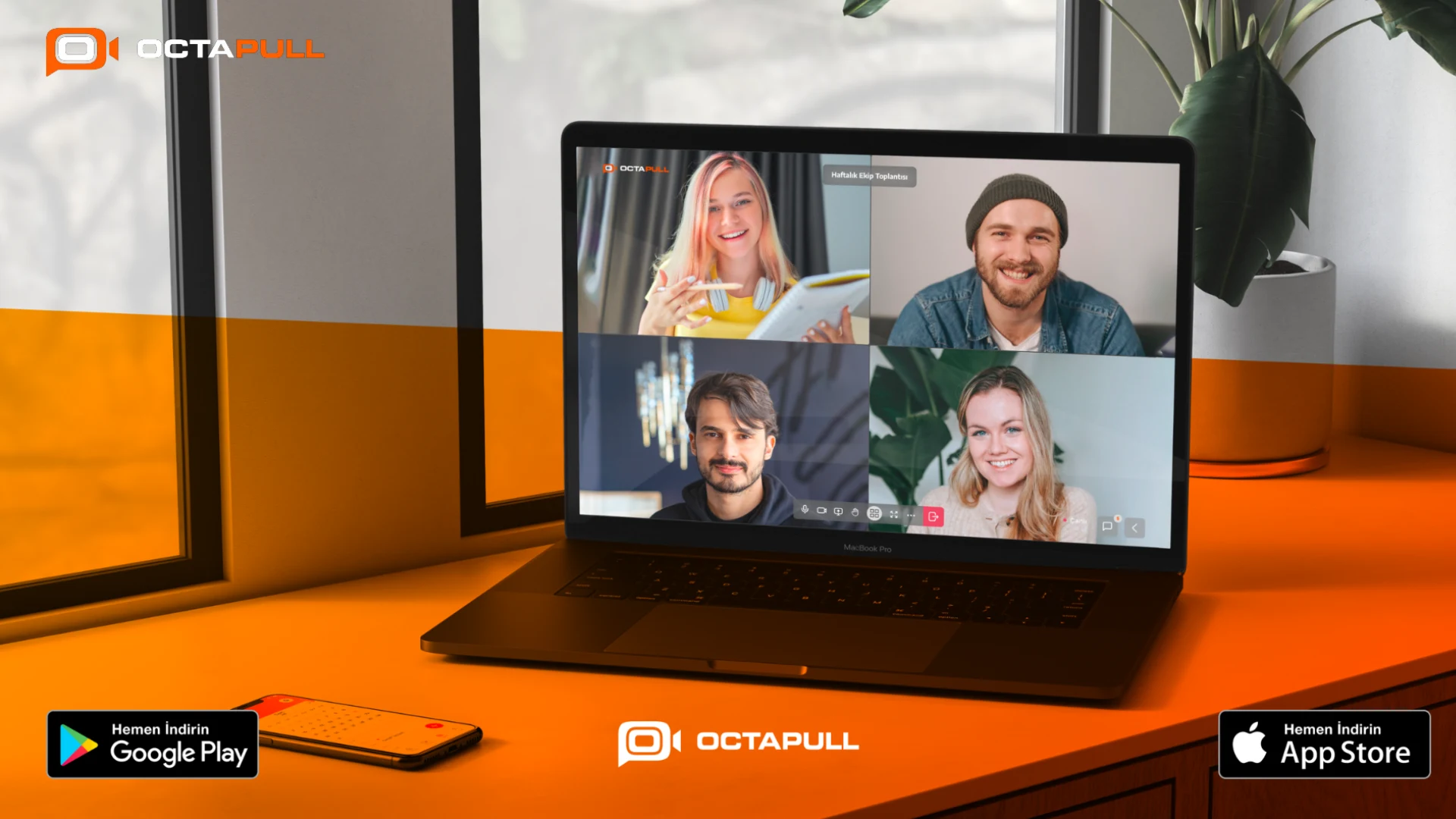
OctaMeet aims to reduce post-meeting workload with its AI-supported summarization and action extraction features. Developed with OCTAPULL infrastructure, the local platform stands out through comprehensive Turkish language support and security.
Automatic Meeting Summary Generation
When the meeting is completed, the OctaMeet AI engine analyzes the entire transcript to create a structured summary. Critical decisions and main headings are presented in an easily readable format.
Instead of reading pages of long transcripts, participants can access a structured text comprehensible within minutes. Since the summarization process concludes without human intervention, leaders can focus on strategic tasks.
Determining Action Items After the Meeting
The OctaMeet AI engine can scan the meeting transcript to automatically detect commitment expressions and task assignments. Action items are thoughtfully matched with responsible team members and listed with deadlines.
Incomplete tasks can be automatically moved to the next meeting agenda. Consequently, project managers may not have to spend additional effort to track open items left from the previous discussion.
Secure and High-Quality Video Conferencing Experience
OctaMeet supports securely hosting corporate data within national borders through end-to-end encryption and Turkey-based server infrastructure. Thanks to its compliance structure, discussions can be conducted within complete privacy frameworks.
Unlike standard video conferencing tools, OctaMeet combines high audio and image quality with its security infrastructure. Noise cancellation and multi-platform support can contribute to an entirely seamless meeting experience.
A More Understandable Summarization Experience for Turkish Meetings
OctaMeet aims to process nuances specific to local institutions' speech structures more accurately with Turkish language support. Summarization and transcription quality in Turkish meetings can offer a more consistent experience.
Integrated Meeting Management for Corporate Teams
Working in full compatibility with the OCTAPULL ecosystem, OctaMeet can seamlessly integrate meeting data into tools like OctaChat and OctaSales. Meeting outputs become a natural part of the workflow.
Experience OctaMeet firsthand and discover the difference this AI-powered video conferencing app can make for your organization. Sign up now and start transforming your meetings!
Frequently Asked Questions
You can find the most frequently asked questions and short answers regarding AI-supported meeting note taking below. These answers aim to provide a practical reference source for active decision makers.
What is AI Meeting Note Taking?
AI meeting note taking is a comprehensive approach that automatically converts meetings into transcripts using speech recognition technologies. The system can create structured summaries containing vital decisions and action items.
What Are the Benefits of AI-Supported Meeting Note Taking?
Time savings, note accuracy, and action tracking can be counted among the prominent benefits of AI-supported meeting notes. Eliminating the manual note taking process can help employees prioritize strategic tasks.
How Accurate Are AI Meeting Notes?
The accuracy rate can differentiate according to the speech recognition engine and audio quality. While optimized platforms offer highly consistent transcription quality, absolute accuracy cannot be promised for any system.
Can AI Note Taking Be Used for Turkish Meetings?
AI platforms offering Turkish language support can be used for the transcription and summarization of Turkish meetings. Local platforms like OctaMeet aim to manage the process consistently through specific optimization.
Can Action Items Be Extracted Automatically After the Meeting?
AI systems can automatically detect task items by analyzing commitment expressions mentioned throughout the transcript. Each task can be matched with a responsible person and listed with its deadline information.
How Does OctaMeet Support the AI Meeting Summarization Process?
OctaMeet initiates the NLP-based analysis process by instantly converting meeting conversations into text using speech-to-text technology. It completes all post-meeting steps without human intervention through its automated summary features.